
A Special Thanks to Viz Media and NetGalley for an ARC.
Before we begin this review, I would like to give readers a fair warning about this manga. Cocoon contains the following: War violence, body gore, and suicide. It is a story based on a real life group known as the Himeyuri Student Corps.
San and her friends attend a boarding school for girls on Japan’s Southern Islands, but their studies were suddenly interrupted when they and the other students are recruited to help the war effort as assistant nurses. They were sent to the front lines, the girls begin to realize that they have to deal with more than just the threat of enemy bombs overhead. Stuck in a cave filled with the harsh reality of war in a field hospital, San wished she could wrap herself and her friends in a cocoon of protection. But invisible threads of affection are no match for the carnage that surrounds them, and more students begin to perish day by day. Worn down by starvation and loss, what will San and her remaining friends do when they are told to find their way home through the fields of war?
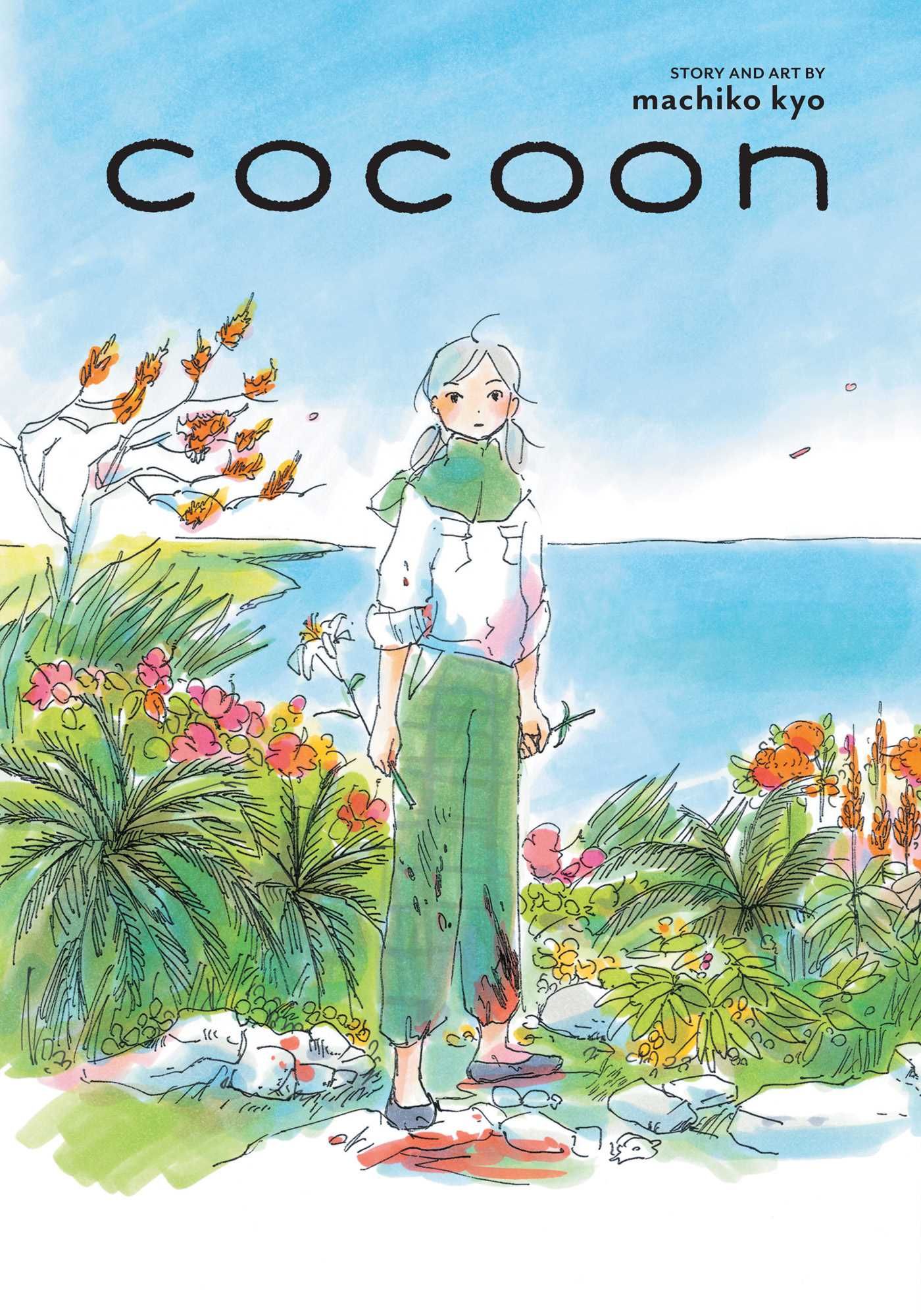
Machiko Kyo’s story and art strike a tone that feels urgently needed today—an era when war is too often glorified or turned into entertainment in video games, music, and films. Cocoon never lectures or preaches. Instead, it simply shows us young girls, barely more than children, thrust into caves turned slaughterhouses, wiping blood from their hands while their friends die around them. Their desperate longing for a “cocoon” is one we all recognize: normalcy, safety, and above all, a future. After finishing the book, the story feels painfully relevant. In a world still ravaged by conflict, Kyo’s quiet, devastating pages remind us what war actually costs—the innocence, dreams, and lives of the youngest and most vulnerable.
There is something uniquely horrifying about how wars consume the young and innocent. The Himeyuri girls were not soldiers — they were just schoolgirls. Yet they were fed into the war machine and discarded. Kyo’s restrained, delicate art only amplifies the horror, forcing us to witness the carnage through their eyes.
AD: If you want to understand the full historical scale of the Battle of Okinawa that forms the backdrop of cocoon, I highly recommend Joseph Wheelan’s Bloody Okinawa: The Last Great Battle of World War II. It’s a gripping, detailed account of one of the Pacific War’s bloodiest campaigns.
This post contains affiliate links, which means that if you click on one of the product links and make a purchase, we’ll receive a percentage of the sale. Whatever purchase through the affiliate links helps the site.
Reading this in 2026, I couldn’t shake the uncomfortable parallels to today’s conflicts. The faces of displaced children, bombed hospitals and schools, and the seemingly endless cycle of trauma scrolling across news feeds — all echo the same broken promise that “this war will be different.” Amid that disgust for war, Cocoon still offers a quiet testament to resilience and the bonds between the girls. Their small acts of kindness and solidarity become quiet acts of defiance. That sliver of humanity in the darkness is what ultimately makes the story so powerful — and so heartbreaking.
Cocoon is available now in print and digital, available at your local book store or e-retailer.
Final Grade:
Thanks for reading! If you have any suggestions, news tips, or questions, email them to: webmaster@bigrednerd.com.
Follow Me on Social Media!



One thought on “Innocence Lost: How Cocoon Humanized The Himeyuri Corps’ Tragic Fate”
Comments are closed.