
A new report from PEN America, released on October 5th, reveals nearly 12,000 instances of book bans in public schools during the 2025-2026 school year—the highest number recorded in a single year since the organization began tracking the issue.
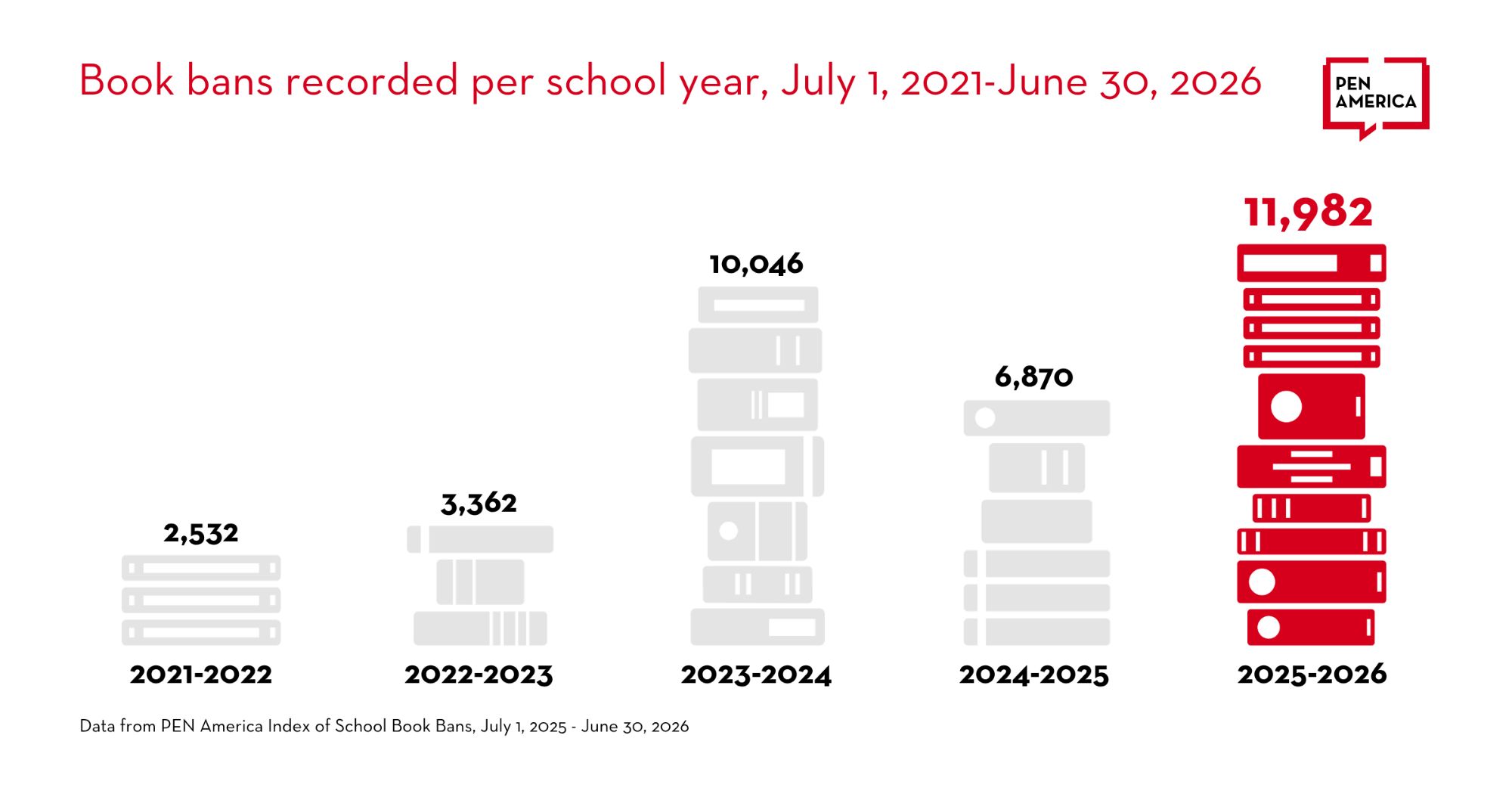
The report coincides with Banned Books Week, the latest accounting of banned books bans increased to 34,000 instances since PEN America began documenting the spreading book censorship crisis in schools in 2021.
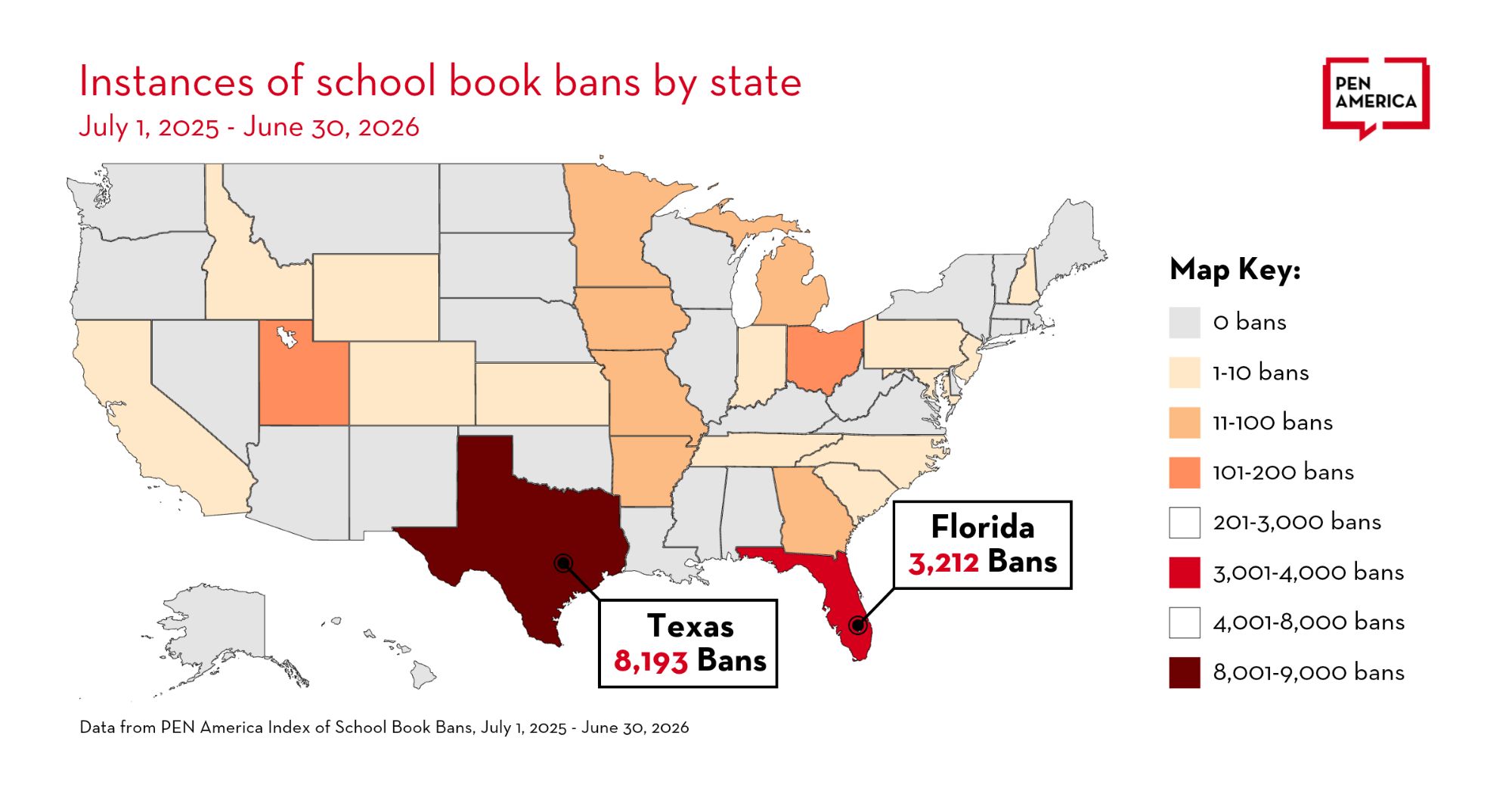
It comes to no surprise, but Texas leads the nation in a disappointing way with the largest recorded number of book bans during the 2025-2026 school year with 8,193 Bans, surpassing Florida (3,212 Bans) due to the impact of Texas Law, SB13, which bans broad categories of books in schools. Florida had been No. 1 for three consecutive years.
School Book Bans by States (Highest to Lowest):
- Texas- 8,193
- Florida- 3,212
- Ohio- 117
- Utah- 108
- Minnesota– 80
- Michigan- 68
- Arkansas- 50
- Iowa- 49
- Missouri- 25
- Idaho- 9
- South Carolina- 9
- Tennessee- 6
- Indiana–6
- Pennsylvania- 4
- Wyoming- 3
- Kansas- 1
- Colorado- 1
- North Carolina- 1
- Maryland- 1
- New Jersey- 1
- New Hampshire- 1
As a Texan, I am ashamed of my state for joining Florida in becoming blueprints of educational censorship, where special interest groups, state laws, and politicians have converged to pressure school districts to restrict and remove access to books. Both states have by far the most complete record of book bans, owing to public records requests from grassroots organizations, the Florida Freedom to Read Project and the Texas Freedom to Read Project. These advocates make it possible to go beyond publicly available data which has dwindled in a chilled political climate and with waning public attention. These records requests allowed this report to record thousands of bans that were otherwise invisible.
AD: Unban your bookshelf. Discover the powerful stories shaping the conversation this Banned Books Week on Amazon, part of Prime Big Deals Day. 📚✨
This post contains affiliate links, which means that if you click on one of the product links and make a purchase, we’ll receive a percentage of the sale. Whatever purchase through the affiliate links helps the site.
Artificial Intelligence Accelerating Book Bans
Artificial intelligence is increasingly accelerating book bans, a trend PEN America highlights as growing more common. In response to vague state laws and directives, many school districts are using generative AI chatbots to screen library materials. These tools often recommend removals simply because other districts have banned the same titles, rather than because the books are legally obscene. The result is a snowball effect that expands bans while ignoring librarians’ professional judgment and community input—an approach PEN America says will only deepen the crisis.
The Removal of Manga and Graphic Novels
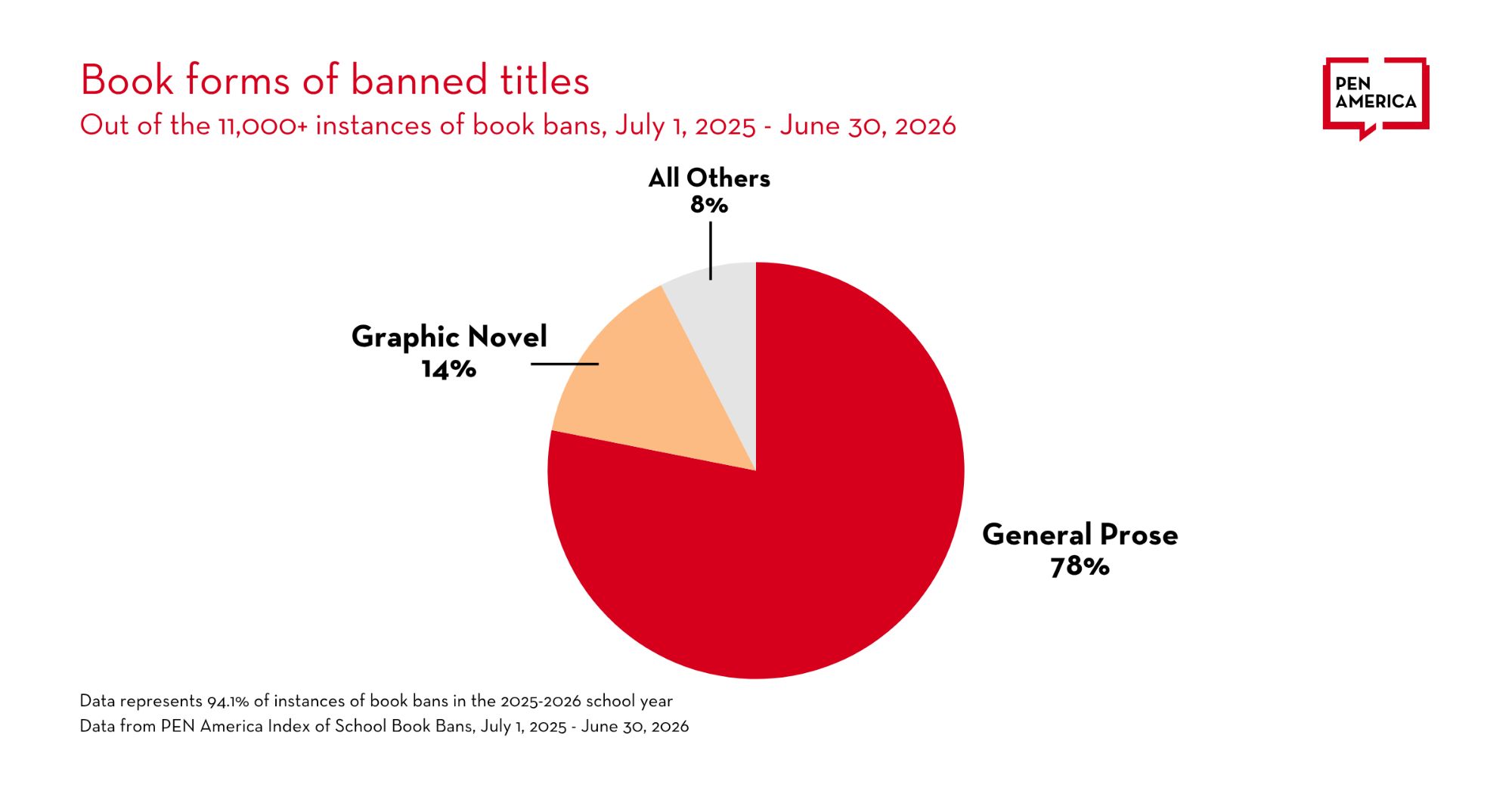
Another alarming trend is the pervasive banning of Graphic Novels and Manga. Manga titles are highly accessible and popular due to its unique storytelling, clear character arcs, and a wide variety of genres that appeal to all ages. Much like books that offer a variety of diverse characters and different identities, it has been met with a wide variety of critics and would-be book banners.
Like Graphic Novels and other illustrated texts, the visual panels in manga are often taken out of context with challenges often targeting visual depictions of sex, violence, and gender identity. “Context stripping,” or examining panels or images without any regard to the book as a whole, this is a common tactic used in misinformation campaigns against manga titles, with censorship advocates deeming them “inappropriate” or “explicit.”
Manga Creators Atsushi Ohkubo (Fire Force and Soul Eater series), Hajime Isayama (Attack on Titan series), Rumiko Takahashi (Inuyasha, Inuyasha Ani-Manga, and Ranma 1/2 series), Akira Toriyama (Dragon Ball, Dragon Ball Z), and Yusei Matsui (Assassination Classroom series) all appear in PEN AMERICA’s list of most commonly banned authors. Their works are often targeted for removal as entire series, meaning that all volumes in a series are removed at once — in some cases impacting upwards of 20 or 50 unique titles.
The 2025-2026 school year did not just set a for book bans— it revealed how quickly censorship can scale when vague laws, political pressure, and when artificial intelligence work together. Texas’s leap to the top of the list should serve as a warning rather than a point of pride. When graphic novels and an entire manga series vanishes from shelves overnight and algorithms removals based on other districts’ decisions instead of a careful review from experts, students lose more than individual titles. They lose access to stories that help understand themselves and the world.
As a Texan, I refuse to accept that this is the best that schools have to offer students. Readers, parents, educators, and community members still have the power: attend school board meetings, support the Texas Freedom to Read Project, Florida Freedom to Read Project, similar groups, and keep banned books visible and available. The freedom to read is not abstract. It is either protected in our libraries or steadily erased from them. The choice remains ours.
Thanks for reading! If you have any suggestions, news tips, or questions, email them to: webmaster@bigrednerd.com.
Follow Me on Social Media!



