
Advertisements
Discord is rolled out its updated age-verification system recently, a move that has already reignited privacy concerns among users still wary after the company’s earlier, more invasive plans and a 2025 data breach involving ID scans. Unlike the version delayed in February amid backlash, the new approach automatically places most users into age groups—Adult (18+), Teen (13–17), or Unconfirmed—based on account signals, with Discord claiming more than 90% of people won’t need to actively verify their age.
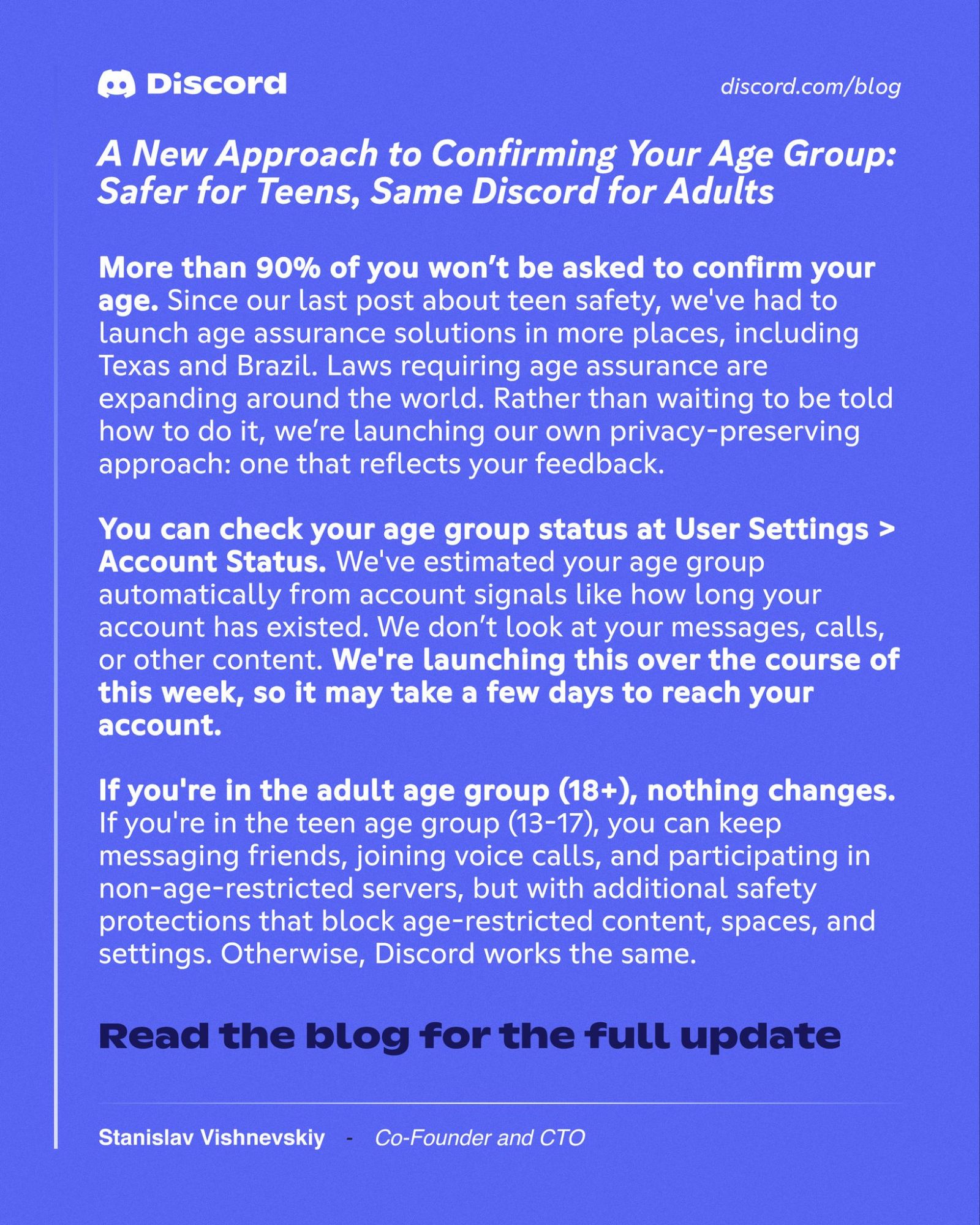
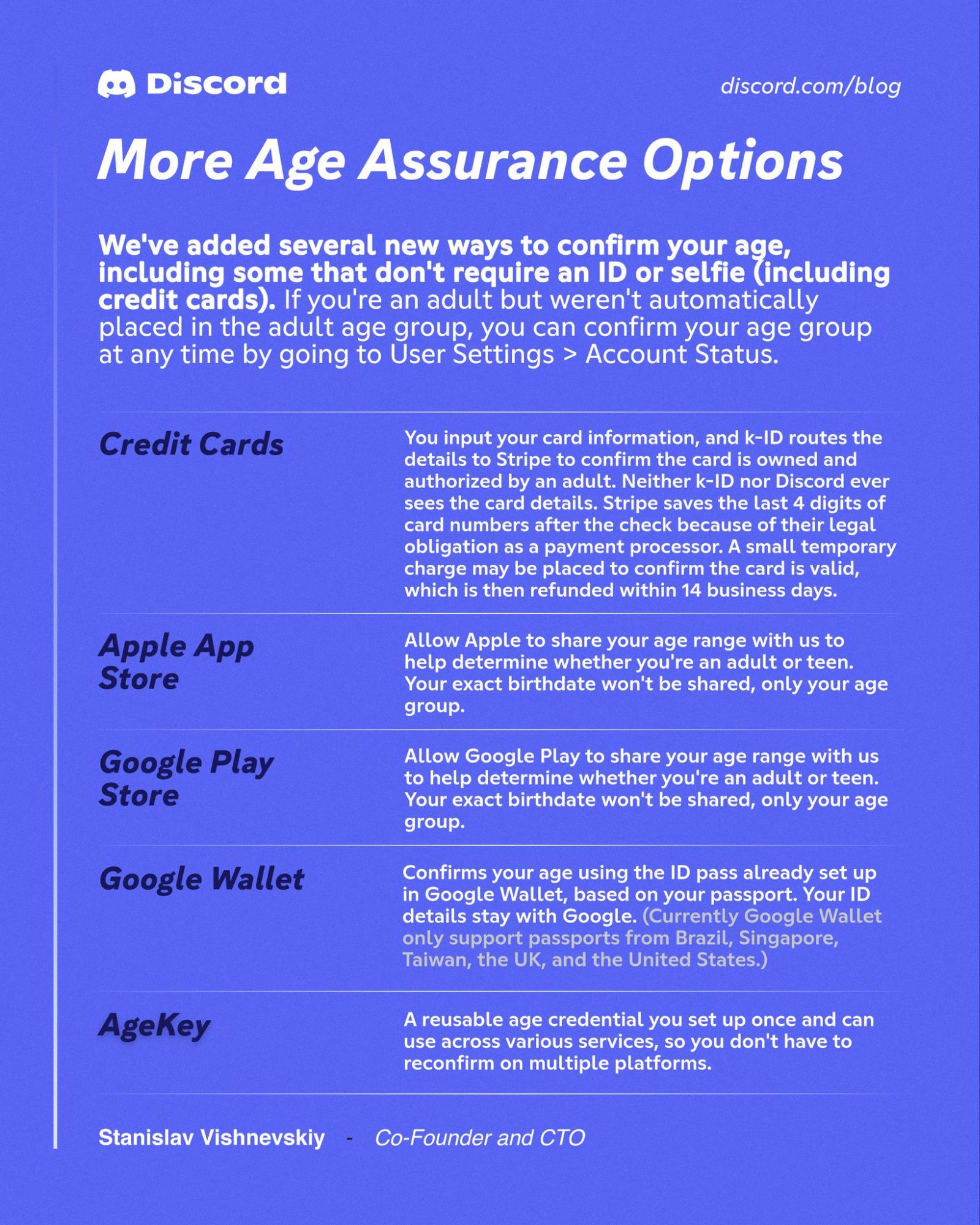
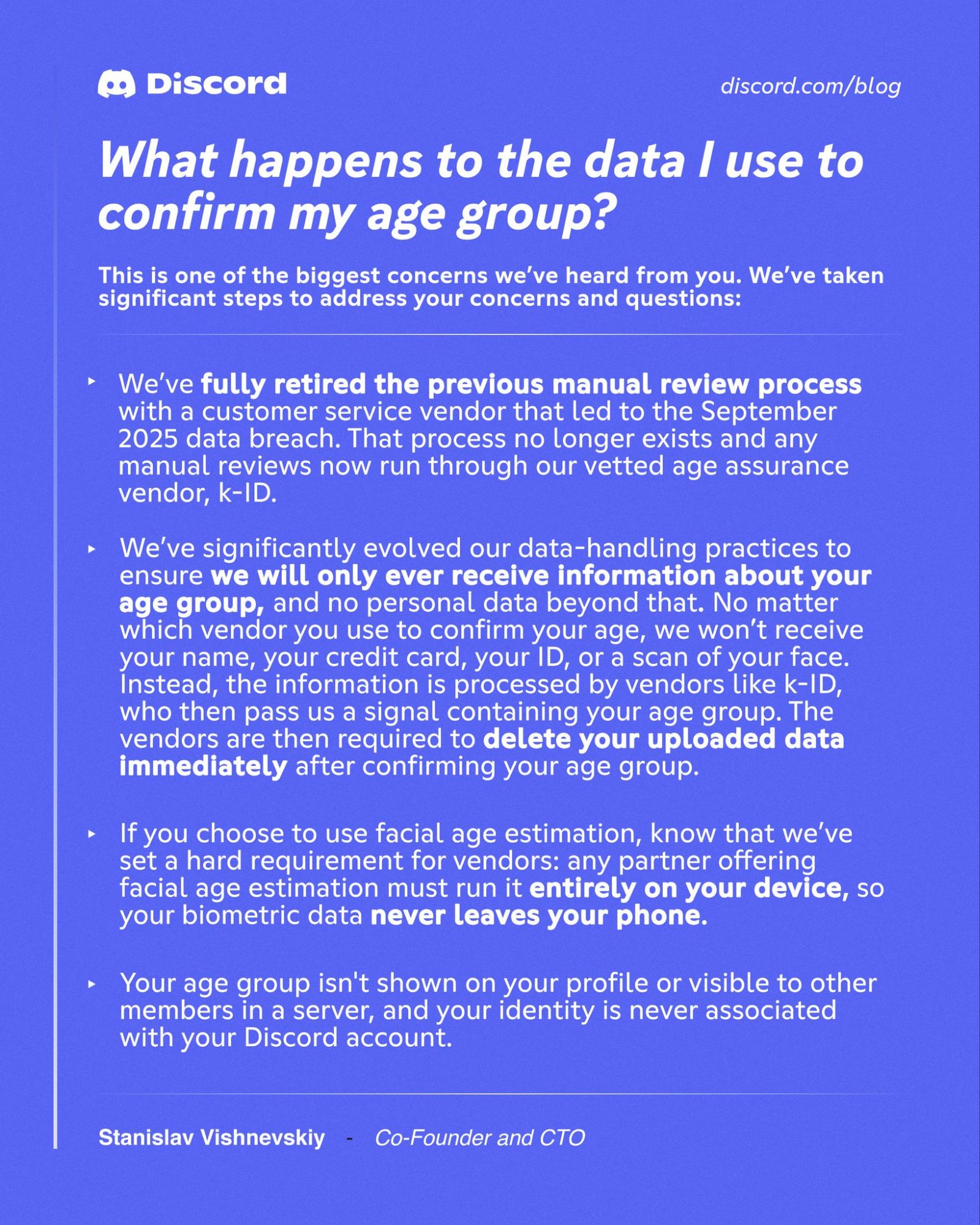
As the charts above show, Discord is also offering several ways for users who need to confirm their age. One option—widely viewed as unpopular—allows users to enter credit card details. According to CTO Stanislav Vishnevskiy, the vendor k-ID “routes the details to Stripe to confirm the card is owned and authorized by an adult. Neither k-ID nor Discord ever sees the card details.” Users can also share their age range through the Apple App Store or Google Play Store; Vishnevskiy noted that “your exact birthdate won’t be shared, only your age group.” Additional options, including Google Wallet and AgeKey, are detailed in the graphics above.
Despite these changes, the new policy has been met with intense backlash. Some of the harshest reactions have come in the form of graphic online memes and fan content depicting Discord’s mascot Wumpus being tortured or violently harmed (these are digital illustrations and memes, not real-world acts of violence).
Advertisements
Advertisements
The Factors that led to the Discord Age-verification Mandate:
- February 2026 Backlash and Delay: The company originally planned a broader global “teen-by-default” system for March 2026 that leaned more heavily on face scans and ID uploads. This lead to heavy backlash (worsened by the 2025 third-party data breach that exposed ~70,000 IDs) forced them to delay the global rollout to the second half of 2026 and redesign it to be less invasive.)
- The Expansion of Age-verification laws: Discord has repeatedly stated that laws requiring Age-verification has grown world-wide. Key examples are the UK Online Safety Act, Australia’s rules, and Brazil’s Digital Statute for Children and Adolescents (Digital ECA), which took effect in March 2026 and forced Discord to implement age assurance there earlier.
- A desire to control the approach proactively: Rather than wait for more countries and the United States to impose stricter or more fragmented rules, Discord decided to launch its own privacy-focused system (automatic age-group estimation for 90% of users + multiple confirmation options) on its own terms.
- Texas Legal Pressure: In a move that could be construed as political motivation due to his current campaign for US Senate and selective enforcement, Texas Attorney General Ken Paxton sued Discord in May 2026. In July 2026, a court issued an agreed temporary injunction ordering Discord to extend UK-style age-assurance measures and default teen safety protections to Texas users within 90 days. Discord’s blog specifically cited having to launch solutions in Texas (and Brazil.)
- Ongoing Regional Pressure (including the current situation in the Philippines): In late September 2026, Philippine Authorities temporarily restricted Discord over concerns related to school shootings, nihilistic violent extremism, and grooming of minors. The company pointed to its new Global Teen Experience / age-assurance system while negotiating. This shows the kind of regulatory pressure the company is facing in multiple places at once.
Regardless of how one feels about Discord’s safety policies, this raises a clear First Amendment issue. When government pressure forces a company to demand government IDs and restrict content access for unverified accounts, “child protection” can quickly turn into government-mandated censorship. Places like Texas may have won a temporary victory, but the threat to online privacy and free speech is worth taking seriously.
Source: Official Discord Twitter Page
Thanks for reading! If you have any suggestions, news tips, or questions, email them to: webmaster@bigrednerd.com.
Follow Me on Social Media!



The Wumpus memes are genuinely unhinged, though. People online really do not know how to process a policy update without instantly turning the mascot into a medieval torture victim…
LikeLiked by 1 person
I couldn’t go much into detail about the Wumpus memes in the article, due to a lot of them being so violent. So, I figured a link to the Post Quotes would explain users’ feelings about the matter more.
LikeLiked by 1 person