
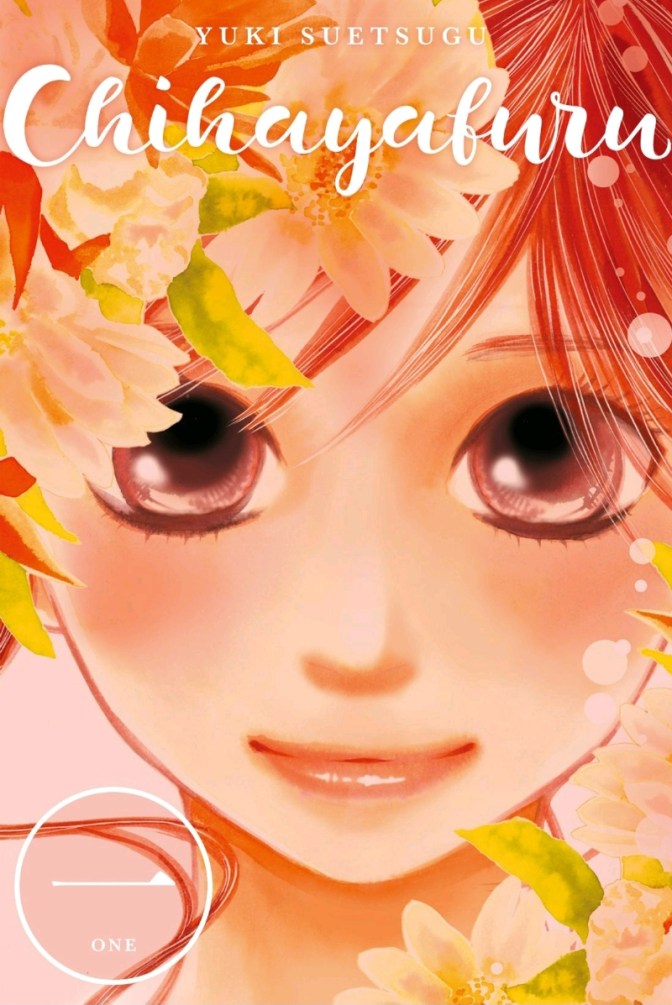
I have seen the ads for this series on Crunchyroll, but today I had a chance to review Kodansha’s Josei Manga, Chihayafuru. The manga was first serialized in Kodansha’s Be Love magazine in 2007, it is currently still running to this day; it consists of 45 Tankōbon Volumes (24 volumes currently in the U.S.) Illustrated and written by Yuki Suetsugu, Chihayafuru is about a young girl named Chihaya Ayase who spent most of her life supporting her sister in her modeling career. Then one day, she meets a boy named Arata Wataya who is a talented karuta player; then one day, they became friends and he believes that Chihaya has the potential to become a great player. As Chihaya takes on a new dream of becoming Japan’s best karuta player she is soon separated from her karuta playing friends. Now in high school, Chihaya still plays karuta in the hope that she will one day meet her friends again. This review will be covering Volume One, which contains Chapters One Through Five, from what I have noticed it is similar to another manga, a Shonen manga, Yumi Hotta and Takeshi Obata‘s Hiraku, no Go, each page devoted to the intense drama of a single choice in a karuta game, and the internal mental states of the players.
It may start as your typical drama in the flashback to six years ago with three familiar items in a drama, the Genius, the rich child who is under high pressure to be perfect in everything, and the protagonist who has a natural talent for a certain thing, in the shadow of an older sibling who has the ambition to be something big. While we’re on the subject of the manga, let’s discuss the game that is a big part of the story; Hyakunin Isshu Karuta, Hyakunin Isshu, also referred to as Hundred Poets, is a traditional anthology style of compiling Japanese waka poetry where each contributor writes one poem for the anthology. And Karuta, from the Portuguese word carta, meaning “card,” which was imported into Japan in the 16th century. In Japan, Western playing cards evolved into two types of games: card-matching Karuta and poker-like Hanafuda. One of the more popular variants of the former is Ogura Hyakunin Isshu Uta-Garuta, named after the Ogura Hundred Poets collection.
What I loved about this was the innocence in the childhood friendship of children who were from different sides of the track, three people who became friends (well, after Chihaya defends Arata from being bullied by Taichi.) With each game, each match there was character evolution and Suetsugu does a great job not only illustrating the story but giving the reader that moment where they can enjoy the story without relying on any exaggerated emotion, no gimmicks, just a sense of familiarity and passion. Speaking of illustration, Yuki Suetsugu‘s artwork is another one of the most delightful things about this story, Taichi steals Wataya’s glasses thinking that this would guarantee his victory in the karuta match, but Wataya manages to succeed well enough until Taichi starts moving his cards. Assuming that this would cause a breakdown and lead Taichi closer to victory until Chihaya pushes Wataya to the side and offers to take his place in the match. While her family and classmates do not understand the fascination behind Chihaya’s newfound love for Karuta, she finally finds her dream and a goal to pursue.
Available now at Play-Asia, Chihayafuru: The Blu-ray Box [Limited Edition], Buy Yours today!Final Grade:
Thanks for reading! If you have any suggestions, news tips, or questions, email them to: webmaster@bigrednerd.com.


 Red's Nerd Den