
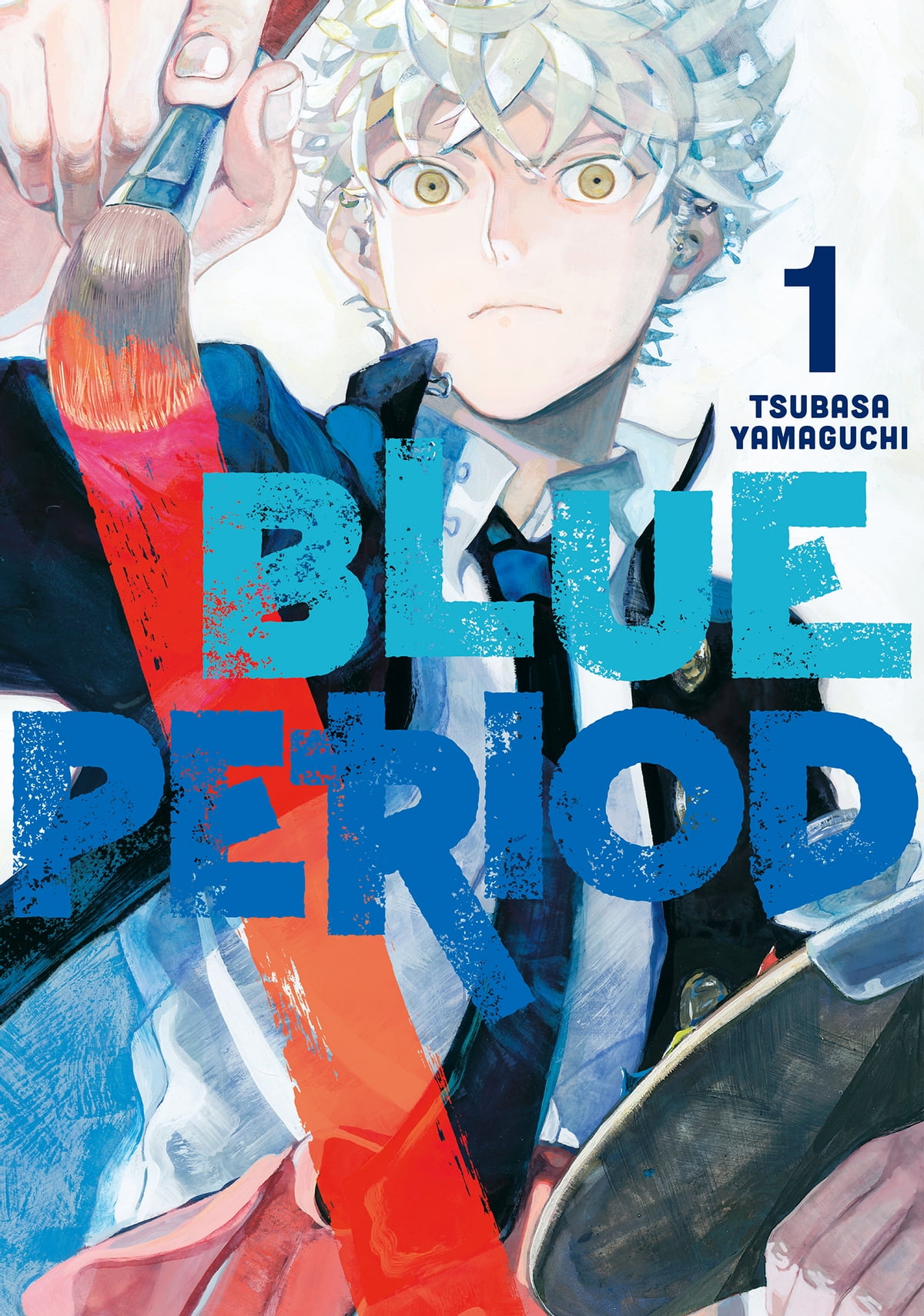
Last year, I had a chance to review the tv anime adaptation of Tsubasa Yamaguchi’s Blue Period. Today, I will begin reviewing the manga starting with volume one. Also, be sure to check out my other reviews.
Our story focuses on a delinquent student named Yatora Yaguchi. He makes perfect grades, has good friends, and is often described as the perfect student. Struggling with feelings of emptiness and frustration, his attention is caught by a lone painting that was in the High School’s Art Club. It captured not only his interest but awoke a kind of beauty he never knew existed. Compelled and consumed, he dives in headfirst. He’s about to learn how savage and unforgiving art can be.
I have said it before, and I’ll say it again, it is nice to have a book (and a television show) that explores artwork and creativity. In an industry that is full of stories with superpowered prodigies, giant robots, and fantasy, Blue Period focuses on a person’s journey into a world of creativity. The first volume does a great job of addressing issues that artists have faced, for example, experiencing the insecurities you have when comparing your art to others, the consistent twinge of worry when someone reminds you that you “can’t make a living off art.” throughout the story, we can see Yatora’s passion for art beginning to ignite, for someone who has an unpolished eye for art, he has a great sense of color (Not Saying This As A Bad Thing!)
Another thing that the first volume does well, is to explain different types of art and art styles, while some feel it is too much at times, this helps the reader get a better grasp of what art is and teaches them about different approaches to the medium. There may be some exaggeration here and there, but it does bring inspiration for many artists who either want to try something new, or perhaps share a similar problem a character is experiencing when it comes to creating something new. Here is a fun fact about the title of this series, it is also a reference to Pablo Picasso’s Blue Period took place between 1901 through mid-1904.
In terms of characters, as I have mentioned previously that Yatora does come off as whiny and a people-pleaser at times, but he is a breath of fresh air in terms of a Manga Protagonist. Then we have Ryuji Ayukawa, who specializes in Japanese art and is a fellow member of the school’s art club. Ayukawa was the one who invited him to join the art club but originally the duo were on bad terms with each other. One of the fascinating things I enjoy about Ayukawa is that they help Yatora look at things at a new angle, help him try to figure things out when the answer in plain sight at times. Over all, the characters were enjoyable, especially Yatora’s potential rival (who, not surprisingly, is a bit of a jerk.)
While the manga was drawn by Yamaguchi, the artwork that is featured in the book was drawn by real people, one for each character. This gives the book a sense of realism and helps give each artist a different style. The still-life paintings that are featured in the first volume aren’t stylized and look like ones that are featured in an actual art class. Please keep in mind that the artwork that is featured includes the proper credit to those who have drawn it.
Blue Period Volume One Is Available Now In Book Stores and Digitally. You Can Also Read Blue Period Now On Kodansha’s K-Manga App.
This post contains affiliate links, which means that if you click on one of the product links and make a purchase, we’ll receive a percentage of the sale. Whatever purchase through the affiliate links helps the site.
Final Grade:
Thanks for reading! If you have any suggestions, news tips, or questions, email them to: webmaster@bigrednerd.com.



 Red's Nerd Den